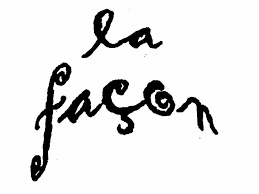
At work, in our relationships, in love as everywhere else, everything comes down to how.
How we speak, how we express ourselves, how we gesture, present, give, articulate. That “how” can produce happiness, misery or total chaos. Two people can indeed deliver the very same message, yet the way they deliver it will mean that one version is welcomed with joy and compliments, while another provokes rejection and anger. And yet it is one and the same message.
Often, because we overlook the place that delivery holds in the carrying of a message, we complain about the negative effect we produce or the rejection we meet with in an exchange. This is precisely why it matters to grasp how much the “how” weighs, so that we can calibrate our messages better and manage to reach our goals, whatever they may be.
Picture two colleagues who have to remind a third about a recurring delay on his files. The first says: “You are always late, you hold us up every single time.” The second chooses: “I have noticed that you have been having trouble getting your files in on time. Could we look together at how to help you, so the team’s work flows more easily? ” In both cases the message is identical: there is a punctuality problem. But it will be received in radically different ways. In the first case, the person feels judged and attacked. In the second, he feels heard and supported. The difference? The how.
When we compare, for most people, the amount of time put into working on the substance of a thought against the time devoted to polishing its delivery, the gap is more than plain. We spend an enormous amount of time refining our thoughts, sorting through our motives, sharpening our arguments, honing our words, organizing our answers. And yet we prune away the most delicate part of the whole process: the way we will actually say it.
Communication does not rest on words alone, but also on gesture, on tone of voice, and even on silences. A “thank you ” can be spoken with a sincere smile and create a moment of warmth, or, on the contrary, tossed off through tight lips with folded arms, and become a mark of irony or contempt. There is a subtle prosody at play here — that is, the art of orchestrating one’s intonation, one’s rhythm and one’s inflections. A manager who congratulates his team in a flat monotone, eyes glued to his phone, will not stir the same motivation as a manager who takes the time to look at his people, to shake a hand, to let a pause land. In the first case, his whole speech seems steeped in insincerity; in the second, it awakens a genuinely unifying surge.
In love, how we say things is often more important than the things themselves. Telling your partner, “You never listen to me ” usually sets off a quarrel. Saying instead, “When you look at your phone while I am talking, I feel less important in your eyes” opens a space for dialogue. The substance is unchanged: a need for attention. But the delivery changes everything. This nuance belongs to circumspection, that delicate prudence which consists in weighing one’s words so as not to wound needlessly. Without it, speech becomes an instrument of disqualification and breeds rancour, even acrimony.
Great leaders are rarely the ones who merely have good ideas. They are above all the ones who know how to carry them across. Winston Churchill, for instance, could have settled for saying, “We must resist”. But the way he delivered his speeches – his rhythm, his repetitions, his gravity – galvanized whole nations. His rhetoric, full of anaphora and contrast, bordered on incantation. Conversely, how many brilliant leaders fail to convince because their message, poorly carried, comes across as cold, muddled or arrogant? That stumble, sometimes called oratorical awkwardness or discursive ineptitude, is enough to undercut an otherwise brilliant idea.
The good news is that mastering the how is not innate: it can be cultivated. Noticing how our words land, listening before answering, tending to the form with a smile or a steady tone, practising empathy by asking ourselves, “How would I like to receive this message? ” — these are simple gestures, yet powerful ones. With a little diligence, temperance and goodwill, anyone can transform the way they communicate and make their words more effective.
In professional life as in intimate life, everything comes down to how. A message can be a source of peace or of conflict, of happiness or of chaos, depending on the way it is carried. Words count, but the way we say them gives them life. And it is often that way of saying which builds or destroys the bridges between human beings.
Even the way we give matters just as much as, if not more than, what we give. As we have shown before, practising the law of giving (link) carries many blessings — but the way it is done must still be joined to it.
M. Z.
Comments