What if we woke up tomorrow and it were January 1, 1425…
The alarm would not have gone off. There would not even be an alarm. Only silence. A thick silence, almost animal, broken only by the wind, the creak of wood, the step of a horse somewhere. We would open our eyes and the world would have slipped back six centuries without asking permission.
No more electricity. No more networks. No more satellites to tell us where we are, no digital clouds to tell us who we are. The sky would be a deep black, violent with purity, riddled with stars that no urban glow would come to drown. For the first time in generations, humanity would truly see the night.
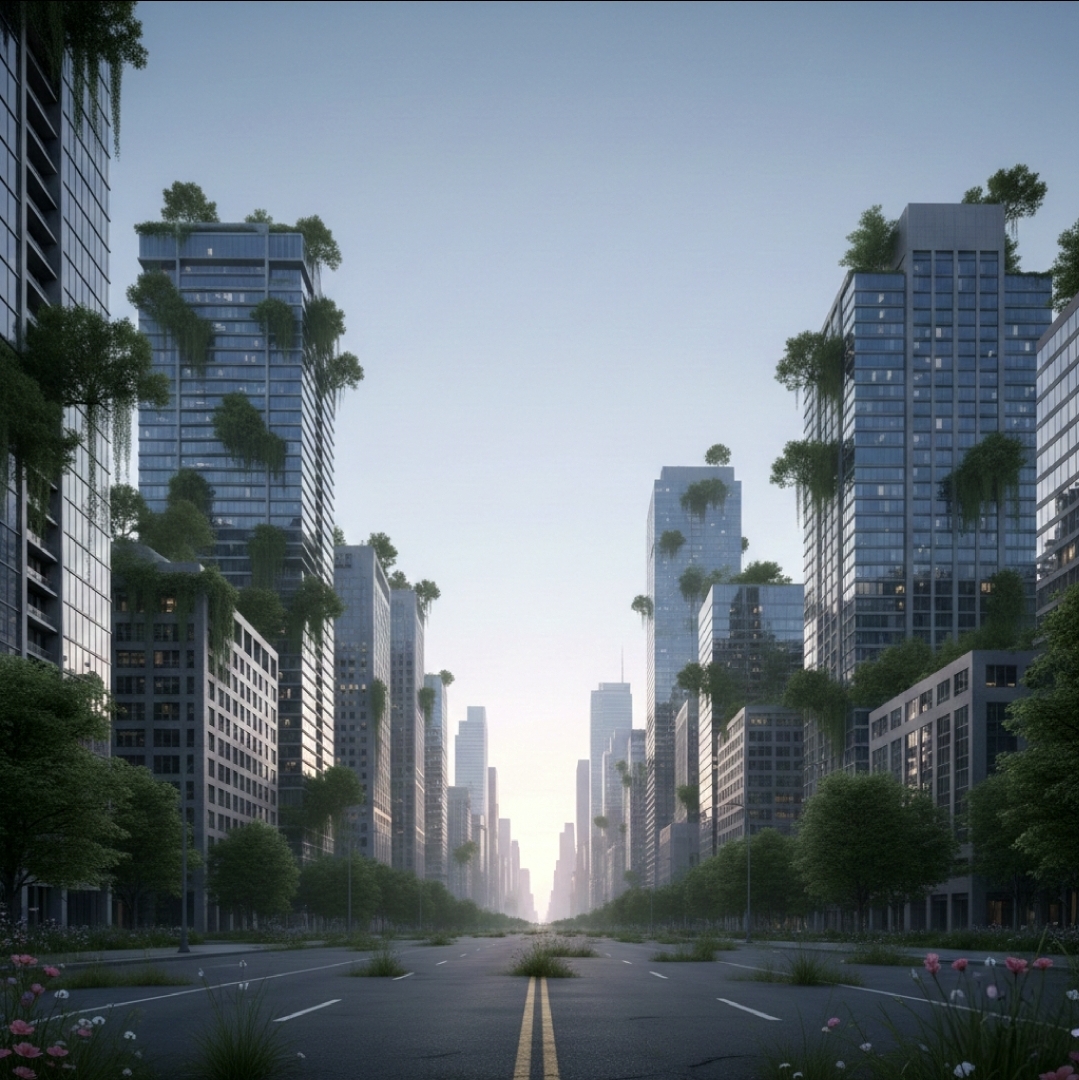
The astonishment would be total. Planetary. Universal. Modern cities, if they still existed, would be unrecognizable — reduced to mute silhouettes, concrete cathedrals stripped of meaning. The screens would be dead, the engines silent, the towers as speechless as fallen gods. Humanity would find itself naked before itself, with no filters, no algorithms, no updates.
And very quickly one truth would impose itself: we are no longer at the top of the chain.
In 1425, the world is vast, dangerous, slow. Maps are full of blanks, peopled with imaginary monsters and very real fears. Borders shift, medicine stammers, death is familiar. A minor infection can kill. One bad harvest can wipe out a town. Knowledge exists, but it is fragile, concentrated, jealously guarded. The printing press has not yet done its work. Knowledge travels at the speed of a horse.
And yet…
Something strangely beautiful would emerge from that brutal return. The planet would breathe again. The forests would regain ground. The rivers would become drinkable once more. The air would no longer carry the taste of fuel but that of damp earth. The animals would not yet have learned to fear us so much. The Earth would be young. Not innocent, but intact in its rhythms. And in truth, it has never been innocent. It has always orchestrated everything, in silence and in perfect command — in a sly dictatorship, even.
Humanity, for its part, would be forced to look at itself without artifice. No more "likes" by which to exist and to feed an unhealthy dependence. No more numbers with which to reassure and delude ourselves. Only the voice, the hands, the memory. We would rediscover the value of a shared fire, of the handed-down word, of oral knowledge, of the palaver tree. Every skill would become precious again: knowing how to farm, to heal, to build, to read the sky.
But the most dizzying part would lie elsewhere.
For we, involuntary travellers in time, would carry within us a knowledge impossible to ignore. We would know what is coming: the revolutions, the empires, the world wars, the machines, the moon, the bombs, the warming, the tsunamis, the extinction. That knowledge would be at once a gift and a curse. What do you do with the future when you know it can be sublime and catastrophic at the same time?
Change the course of history? Or respect its necessary chaos? Warn, or let things come to pass? Every choice would be a potential fracture in time, one that could lead us towards infernal paradises or paradisiacal hells.
And perhaps the real question would not be how to survive in 1425, but do we deserve a second chance?
For if the world were handed back to us younger, more fragile, slower… would we finally know how to walk upon it without breaking it? Would we know how to build without destroying, to know without dominating, to advance without forgetting?
Perhaps that step backwards would not be a punishment but an invitation. A blank page offered to a humanity that, for the first time in a long while, would have the luxury of thinking before acting. The luxury, yes, because today we seem to act before we think.
And on the morning of January 1, 1425, beneath a sky untouched by satellites, a single question would hang in the cold air:
Have we learned anything from the future we have already lived?
M. Z.
Comments