
Should we dress up what is ugly?
In many homes, a heavy silence is woven. A silence stitched out of justifications, secrets and well-meaning lies: “He had a bad day…”, “That’s not who he really is…”, “It will sort itself out…”. And behind those sentences there is often a swollen face, a diffuse fear, a life drawing in on itself. So must we dress up what is ugly? In other words, must we hide the acts that deserve to be condemned?
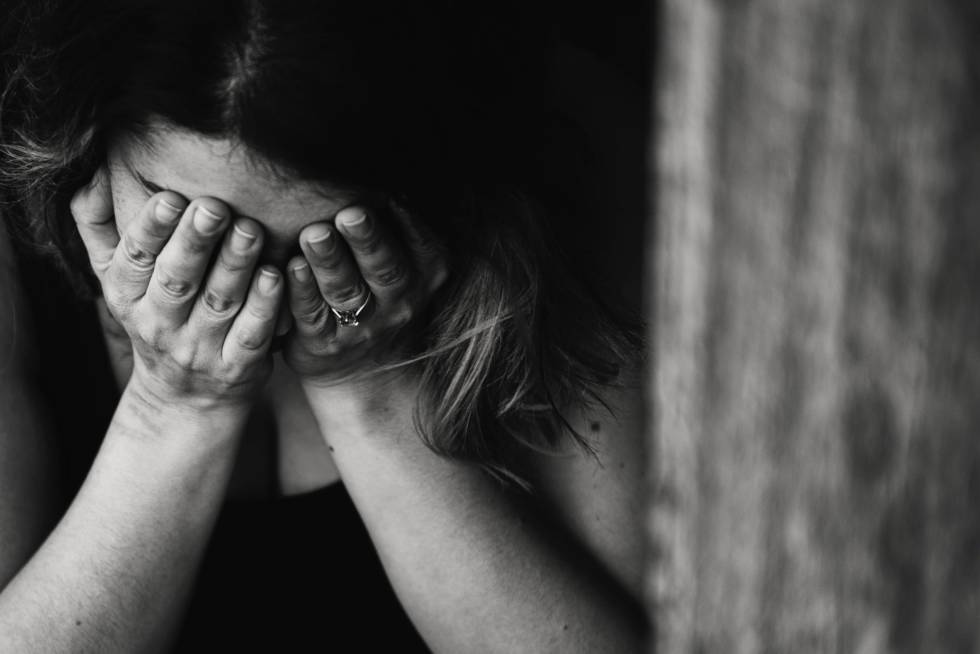
Many are the women — and sometimes the men — who conceal their spouse’s violence. Out of shame, out of fear, out of misplaced loyalty, out of the hope that “it will pass”. The bruises are camouflaged. Excuses are invented. Appearances are kept up because the weight of other people’s eyes feels unbearable.
Concealing reprehensible acts means wrapping them in fine societal finery, in social fabric. It means saying, “My husband isn’t that bad…”. It means protecting your image before family, friends, the church, the neighbourhood. It means maintaining a front where everything looks normal. But behind the front, the house is burning.
Dressing up the ugly means wrapping yourself in invisible chains, taking upon yourself a shame that is not yours. It means shouldering the role of a shield, to the point of exhaustion, sometimes to the point of leaving your health behind, your dignity… even your life. Silence rarely protects the victim. Above all, it protects the aggressor, handing him ground without resistance, where he carries on with no fear of consequences. Every lie, every excuse, every silence becomes one more veil drawn over his violence. And when the truth finally breaks out — for it always breaks out — it is often too late: the body is marked, the soul broken, sometimes the life already gone.
And yet, silent or not, this violence also rests with those who look elsewhere: witnesses, friends, colleagues, neighbours. How many prefer to believe the excuses, to tell themselves that “It is none of their business”? Dressing up the ugly also means letting it happen, closing our eyes, ignoring the signs. When a single word, a hand held out, a sincere ear can open a breach and let a way out come into view.
The question becomes a vital one: is it better to preserve the image of a marriage or to protect a life? To protect a violent man’s reputation or to secure the lives of his children, their future, their dignity? True love could in no case tolerate violence, whether physical or psychological. Marriage must not be seen as a prison. And loyalty should never be equated with complicity.
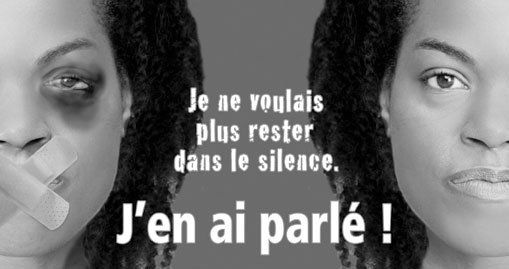
Telling the truth, speaking out, leaving if that proves necessary — none of this is betrayal. It is choosing to live, refusing to be snuffed out by slow degrees under the pretext of preserving a social mask. The fronts must be broken, for it is behind them that violence thrives. It is not simple. It takes courage, sometimes outside help, sometimes professional support. But it is a choice for life, in the most concrete sense of the word.
You are not alone. There are resources ready to walk with you. In Canada, you can reach the Fem’aide line at 1-866-863-7868 or by text message at 1-866-863-0003. Quebec offers telephone help available 24 hours a day through SOS violence conjugale, at 1-800-363-9010.
In Togo, several services can help. The toll-free number 1014, launched by the Ministry of Security and Civil Protection, operates 24 hours a day, 7 days a week, so that cases of rape or attempted rape can be reported in full confidence. Calls are directed to the police for a rapid response.
The Groupe de réflexion et d’action Femme, Démocratie et Développement (GF2D) offers support by telephone and WhatsApp, available Monday to Friday, from 8 a.m. to 5:30 p.m., for situations of spousal violence, trauma, sexual abuse and pregnancy, among others. The government also provides toll-free lines such as 8284 (gender-based violence), 8255 (schools) and 1011 (child protection), as well as integrated “One Stop Center” facilities for holistic care — legal, medical and psychosocial.
Internationally, the United Nations (UN) keeps a record of local helplines country by country. It is a precious resource for anyone in difficulty far from home.
At the end of the road, only one thing matters: staying alive, recovering your dignity, affirming that no one deserves to be mistreated, humiliated or destroyed, not even “to save appearances”. To dress up the ugly is to abandon the light. To strip the ugly bare is to choose the light, even if it hurts, even if it cracks our certainties, even if everything must burn in order to be reborn. Violence must never be covered up. To cover the guilty is to condemn the victim.
So ask yourself the real question: do you want to save your marriage… or your life ? And if you are not the victim, but a witness: do you want to look away… or hold out your hand?
M. Z.
Comments