

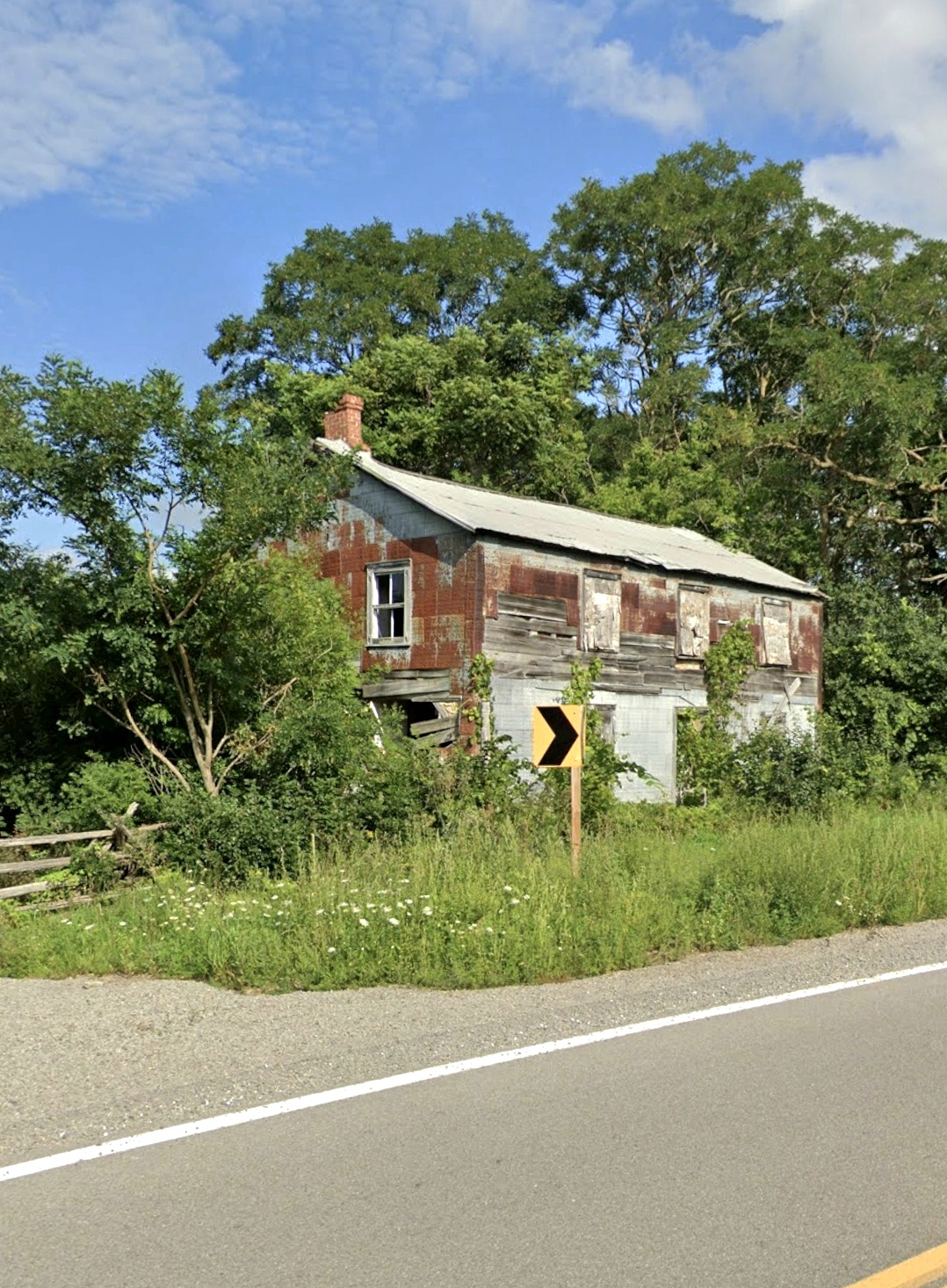
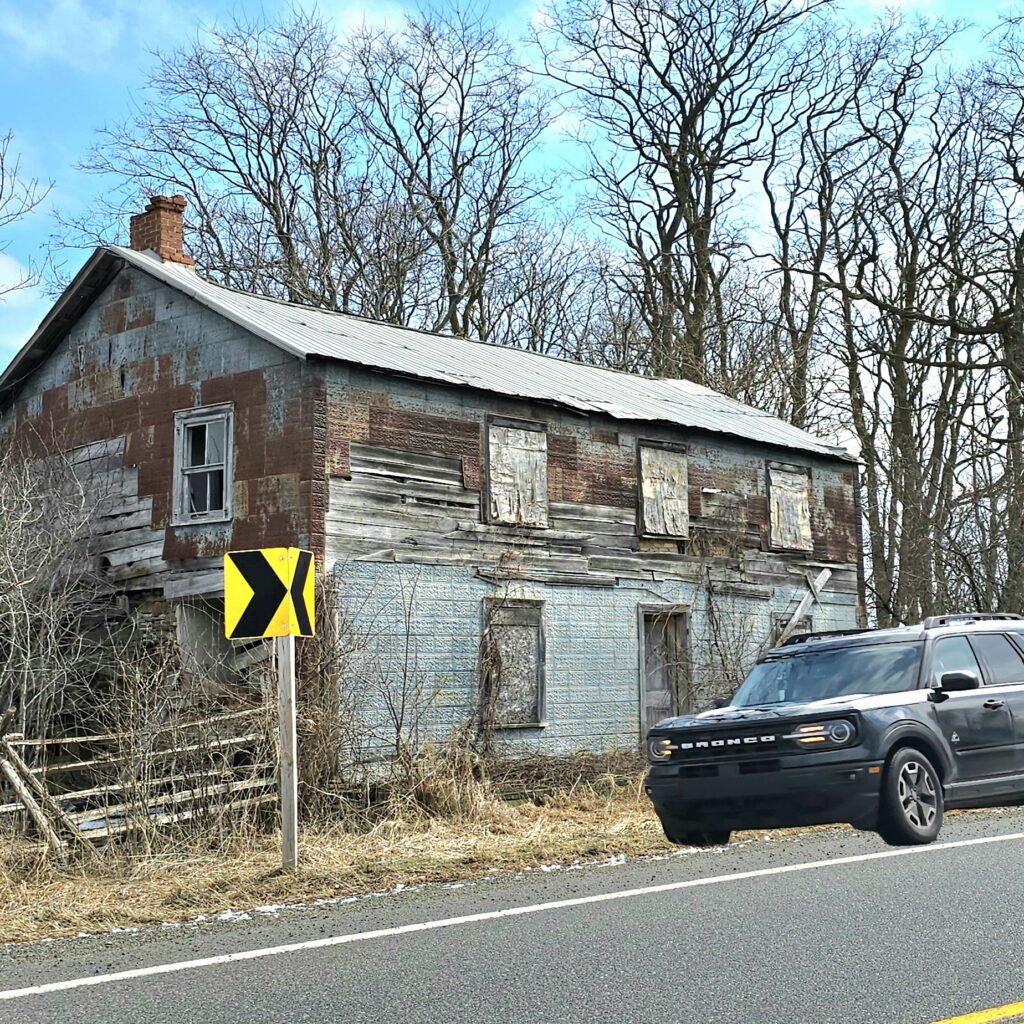
On a recent trip through Ontario, at the wheel of my Bronco, I kept catching sight of dilapidated shacks, abandoned houses, deserted farms and old, forsaken homes.
That scenery, more or less fascinating at first, ended up plunging me into a deep reflection.
To begin with, that reflection started from an obvious realization, almost a truism: everything I was seeing that day, dated, obsolete and abandoned, had once been new. In fact, before it was ever a structure on the ground, it had germinated in the mind of a human being.
Next, we are all familiar with the process that leads from the state of an idea to that of materialization. I then began to imagine the time, the work, the money, the sacrifices, the frustrations and sometimes the loans that had preceded each of these accomplishments. Looking at an abandoned house, I pictured the number of masons who had worked on it. The plumbers, the carpenters, the electricians and other tradespeople who had toiled to turn it into a liveable house.
I then imagined the owner stopping by the bank for loans, by the notary for the deed of ownership, and that same owner devoting the greater part of his income to paying off that mortgage.
I also imagined the joy that family felt on moving into that house, or the astonished look of the farmer deeply satisfied with the cabin he had just put up with a few fellow workers, after a long and demanding effort.
After that long introspection, I came back to the wheel of my car to take in the desolate state of those accomplishments that day.
Indeed, those buildings that were the pride of certain souls many years ago are today nothing more than remains over which nature has reclaimed its rights.
That observation deeply unsettled me, on both the ecological and the human level.
On the ecological level, the obvious fact is that, however much time we devote to pushing nature back, sooner or later it will end up reclaiming its rights. We are only visitors to an earth we believe we have mastered, given our technological advances, our knowledge and our presence on every known continent of the planet.
When we take the reflection further, the shock cuts deep: a human being’s lifespan rarely exceeds a hundred years, our species is only 300,000 years old, while the planet we live on is, for its part, 4.54 billion years old.
On the human level, the certainty that seizes the soul is that, whatever the quantity and the quality of what we invest or sacrifice in order to achieve or own anything at all, time will end up getting the better of us.
That realization ought to be enough to hold in check all the sorrows, the fears and the wounds we nurse deep inside. For why suffer so much, give so much, sacrifice so much, if in the end everything we will have devoted our lives to ends up, at worst, forgotten and forsaken, and at best, antique?
In any case, there is a deeply symbolic aspect that must not be obscured: we do not necessarily build to last through the centuries. Human works answer a need first of all. In the example of that house, the aim was not to create a fortress for a thousand years, but a home to shelter a family. The satisfaction, the joy and the sense of duty fulfilled that father felt are beyond price.
The farm I was speaking of was not meant to become eternal either: it was there to provide a setting for work, to shelter the livestock, to feed a family. Having lived there, worked there and passed that land on to descendants already constitutes a profound success for that farmer.
And perhaps that is the truth we forget too often: works pass away, walls crumble, the years erase our traces. But what truly remains – and what shapes a happy life – are the joys felt along the way, the memories forged, the pleasures lived in the moment. Not the accumulation of possessions that will end up outliving us, but the quality of the existence we have inhabited.
So perhaps the real tragedy is not that our works disappear, but that we live as though they were meant to outlive us. For our houses collapse, our projects fade out and nature always ends up taking back what we took from it. In fact, will our efforts still echo in 100 years?
And what if, deep down, the only legacy were not the trace we leave on the world, but the imprint the world leaves in us?
When the stone has fallen, the wood has crumbled, the moss has covered the walls and the memories have mingled with the wind, only one question will remain:
Did we love, live and inhabit this life with enough intensity not to have passed through here for nothing?
I leave it to each and every one to judge.
M. Z.
Comments